


Cloud architecture and setup
Design AWS or Google Cloud environments around applications, data, integrations and access needs.
Cloud infrastructure and DevOps services for ecommerce and real estate software: architecture, migration, deployments, monitoring, security and recovery.
Plan, deploy and operate infrastructure around the data flows, integrations and release needs of your commerce or real estate platform.
Design AWS or Google Cloud environments around applications, data, integrations and access needs.
Plan staged moves of applications and data, with validation and rollback paths to reduce disruption.
Create repeatable build, test and release workflows across development, staging and production.
Define permissions, secret handling and environment boundaries suited to your teams and workloads.
Track failures, protect data and document recovery steps for operationally critical systems.
Review capacity and cloud spend against real traffic and changing business requirements.
Cloud infrastructure and DevOps services give operational software a dependable place to run and a controlled way to change. CodeNdCoffee plans and builds cloud environments around the systems we know best: ecommerce middleware, product-data workflows, inventory and order integrations, and real estate platforms. The design starts with the application’s data flows, users and failure points, rather than a generic server checklist.
A commerce platform may need to process supplier files, sync inventory across channels and recover cleanly when an external API is unavailable. A real estate platform may connect buyer and seller portals, documents, notifications and a transaction record that must remain consistent. Those requirements shape hosting, deployment, monitoring, access and backup decisions. We identify which jobs are time-sensitive, which can be retried, and which data must be restorable after a failure.
We assess the existing application and the systems it depends on before proposing AWS, Google Cloud or a change to your current setup. The right answer may be to improve an environment you already own, not to move everything to a new provider.
Cloud infrastructure and DevOps services cover six connected areas in a production system:
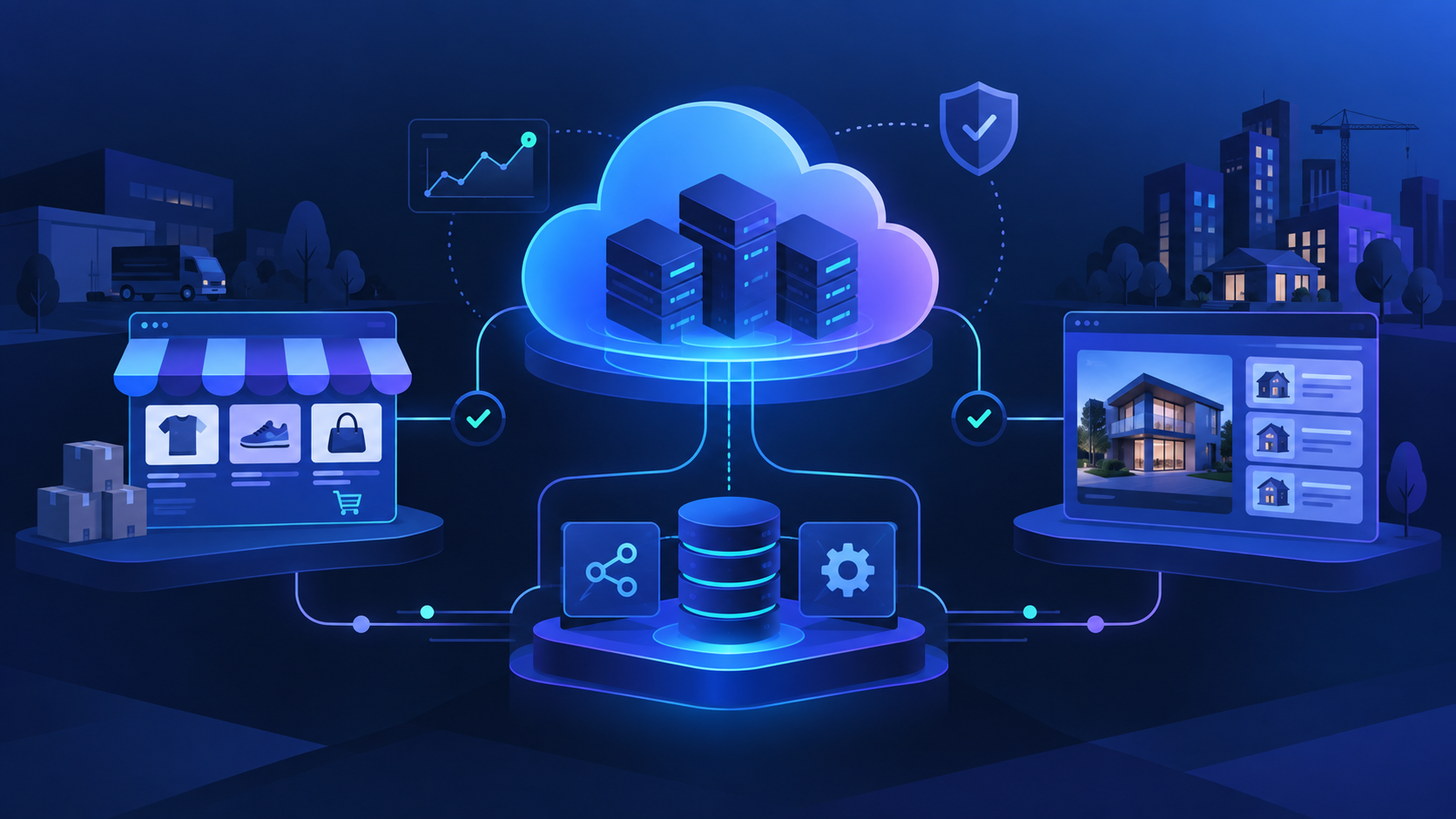
Our ecommerce middleware work connects storefronts, marketplaces, suppliers and back-office systems. Its infrastructure must support scheduled jobs, API traffic and clear visibility when data fails to sync. Our AI product data enrichment systems add file processing, review queues and controlled publishing to that picture. We plan the environments around those workflows and their expected volumes.
For real estate software, we consider role-based access, transaction state, document handling and the integrations behind a deal. These are examples of the application requirements we design for; the final cloud architecture depends on each client’s system and constraints.
Our cloud infrastructure and DevOps services can also work alongside your existing engineers and providers. Maintenance and support covers ongoing application work after the cloud foundation is in place.
Cloud infrastructure and DevOps services work best when the team can describe what must keep running and what can pause during a release. Before changing providers or deployment methods, we turn those expectations into an operating checklist:
For cloud infrastructure and DevOps services, these checks make provider selection a decision about how the software will be operated, recovered and improved after launch.
AWS and Google Cloud both offer ways to run these workloads, but the choice should follow your current stack, team skills, integration requirements and expected operating costs. The AWS Well-Architected Framework and Google Cloud reliability guidance are useful references when reviewing architecture and recovery plans. We identify who owns the cloud account, who can deploy changes, who responds to alerts and how access is handed over. For businesses serving the US or Europe, the intended data location and contractual requirements also belong in that discussion before a region is selected.
If a commerce or real estate platform is outgrowing its current setup, or releases and incidents take too much manual effort, tell us about the application and its operational pain points. We can assess the current environment and outline a practical next step.
Our Cloud Infrastructure & DevOps Services delivery process combines discovery, solution architecture, implementation, integrations, quality assurance, deployment, and ongoing optimization. Every phase is aligned with your business goals, existing technology, and measurable outcomes.
We assess your goals, users, workflows, existing systems, technical constraints, and success criteria before defining the project scope.
We map the user experience, data flows, integrations, platform structure, and delivery roadmap needed for a reliable solution.
Our team builds or configures the solution in clear milestones, connecting the APIs, platforms, data, and tools your operation depends on.
We validate functionality, integrations, accessibility, security, and performance across realistic workflows before release.
We prepare staging and production environments, manage migration and launch, configure monitoring, and provide practical documentation.
After launch, we monitor reliability, resolve issues, deliver updates, and improve the system using operational feedback and performance data.
See how our Cloud Infrastructure & DevOps Services work turns business requirements into dependable, production-ready digital systems.
Each featured project connects product strategy, user experience, engineering, platform integrations, quality assurance, and post-launch optimization to clear operational goals.
A representative end-to-end engagement connecting strategy, product design, engineering, integrations, and long-term optimization.
From strategy and custom development to integrations, automation and long-term support, explore related services that can strengthen the next stage of your project.
See All ServicesConnect ecommerce platforms, business systems and sales channels through custom middleware designed around your product, inventory, order, fulfillment and operational workflows.
Learn more Real Estate & PropTech SoftwareCustom real estate software for brokerages and property businesses: listings, buyer and seller portals, offers, contracts and transaction workflows.
Learn moreBook a partnership call and we'll map the right approach, responsibilities, timeline, and next steps for your project.
Common questions about Cloud Infrastructure & DevOps Services, from planning to ongoing operations.
Yes. We start by reviewing the application, integrations, deployment process and current cloud environment. If the existing setup can meet your operational needs, we can prioritize targeted improvements rather than a full migration. Any proposed change is scoped around its dependencies, validation steps and ownership.
Yes. We can review the current environment with your team, agree on access and responsibilities, and implement changes in stages. Deployment procedures, monitoring and handover documentation should be understandable to the people who will operate the platform after delivery.
We start with expected traffic, storage, data processing, integration jobs and availability needs, then compare suitable architecture options and their estimated operating costs. Budgets, usage alerts and periodic reviews help identify changes in spend. An estimate is a planning input, not a guarantee of future cloud charges.
We map the application, data, scheduled jobs, external APIs and people affected before planning a move. The plan can include a test environment, staged data transfer, cutover checks and a rollback path. Timing and acceptable interruption are agreed for the specific system; we would not promise a zero-downtime migration without assessing it.
We identify critical workflows, failure signals and data that needs protection. Depending on the system, the scope can include logs, alerts, backup schedules, restore checks and documented recovery steps. Recovery objectives and responsibilities should be agreed before implementation rather than assumed.
We recommend that the client owns the cloud account and has appropriate administrative access. We define who can deploy, manage credentials and respond to incidents, then document the environment and handover steps. The exact access and support responsibilities are agreed in the project scope.

CODENDCOFFEE LLC


640-G, Block R 1 Phase 2 Johar Town, Lahore, 54782
Copyright © 2026 CodendCoffee. All rights reserved.